
A rear-end crash can seem straightforward: one vehicle struck another from behind, so the rear driver must be responsible. But Monroe rear-end accident fault is not always settled by the point of impact. A sudden stop, a chain reaction, or uncertainty about where each vehicle was positioned may change what the available evidence shows. The details matter, especially when drivers or witnesses describe different sequences.
Campbell, House, & Company helps Monroe drivers understand the questions that can arise when a collision account is incomplete or disputed. This article explains why rear drivers are often scrutinized, when other factors may matter, what information can help clarify the sequence, and why a police report is not necessarily the final word on liability. It also covers ways to give a careful account and recognize when a disputed insurance decision may need further review.
Monroe Rear-End Accident Fault: Why the Impact Isn’t the Whole Story
Drivers are generally expected to pay attention to traffic and leave enough space to respond to vehicles ahead. That is why a rear driver may be closely examined after a collision. Still, the location of the damage does not, by itself, prove every detail about how the crash unfolded or establish that only one person contributed to it.
For example, a vehicle may stop suddenly because traffic ahead has slowed, an obstacle is in the roadway, or another vehicle has moved into its lane. A sudden stop does not automatically make the front driver responsible, just as a rear impact does not automatically answer every question about the following driver’s actions. The relevant circumstances may include speed, following distance, visibility, traffic flow, and whether a driver had a reasonable opportunity to react.
When a sudden stop or lane movement matters
The reason for a stop, what other traffic was doing, and whether a vehicle changed lanes just before impact may help explain the event. These details should be treated as facts to investigate, not assumptions about fault. In Monroe, Louisiana, as elsewhere, the way responsibility is assessed depends on the evidence and the rules that apply to the particular claim.
Why vehicle positions matter
Where each vehicle came to rest, the direction of travel, and the location and pattern of damage can help test competing accounts. None of these clues is conclusive on its own. Taken together, however, they may help explain whether there was one impact, a sequence of impacts, or an earlier event that contributed to the collision.
What Evidence Can Clarify How a Monroe Rear-End Collision Happened?
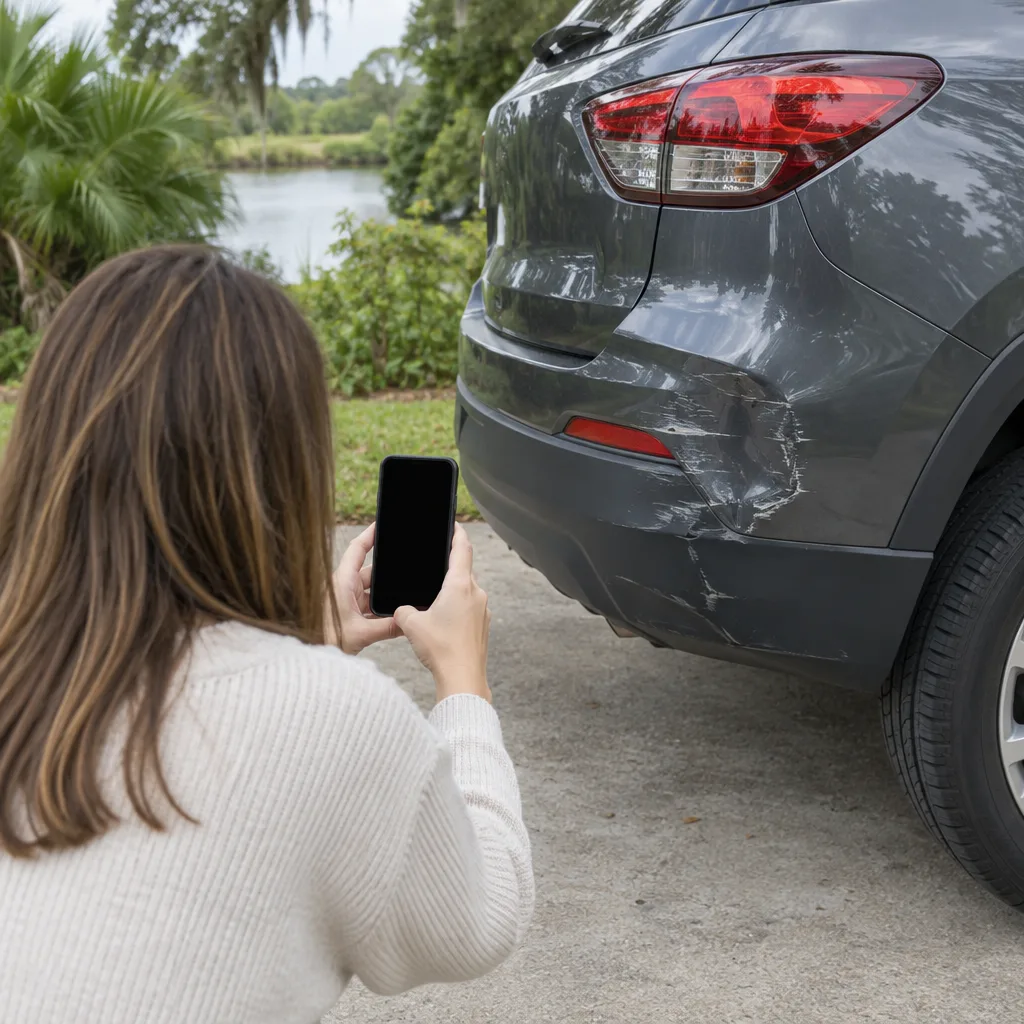
A clear record of the scene can help distinguish what a person directly observed from what they later inferred. If it is safe and practical, useful details may include:
- The vehicles’ positions, direction of travel, and visible damage.
- The time, location, weather, lighting, and traffic conditions.
- Names and contact information for witnesses who are willing to provide them.
- Whether nearby businesses or traffic systems may have recorded video.
- The identities of responding agencies and any report or incident reference information provided.
Avoid moving into traffic or putting yourself at risk to collect information. Photos and video can be useful, but they may not show timing, speed, or what happened outside the camera’s view. Witness accounts, available video, and other records may add context. For examples of ways to find distracted-driving evidence after a Monroe crash, see how separate sources can help assess whether distraction could have played a role.
In Monroe, the Monroe Police Department or the Ouachita Parish Sheriff’s Office may respond depending on where a collision occurs and which agency has jurisdiction. A responding officer may document observations and gather statements, but an incident report is not necessarily a final decision on civil liability. It is one source of information, and it may not capture every detail or resolve differences between accounts.
Reports, Insurance Questions, and Steps After a Disputed Fault Decision
A police report can be useful, but it may reflect only what was available to the officer at the scene. It can contain driver and witness statements, observations, or a preliminary account. If a report leaves out a detail or an account seems incomplete, that does not automatically determine how an insurer or a court will assess the claim. Further evidence may be relevant, and procedures can vary by agency and situation.
When speaking with an insurer, it can help to separate what you remember from what you are unsure about. Avoid guessing about speed, distance, timing, or the order of multiple impacts. If asked for a recorded statement, understanding what to consider before giving a recorded statement after a Monroe crash may help you prepare to give an accurate account without treating an uncertain detail as fact.
A few common missteps can make it harder to understand what happened:
- Relying on a quick impression of fault before the sequence is clear.
- Assuming a report or a single photograph answers every liability question.
- Overlooking the possibility that more than one impact occurred.
- Describing a guess as a definite memory when communicating with an insurer.
If accounts conflict, multiple impacts are involved, or an insurance assessment does not appear to address relevant evidence, legal guidance may help clarify the issues. A Monroe rear-end car accident lawyer can evaluate the available information and explain options under the law that applies. You can review the firm’s information about Monroe car accident lawyers as one locally relevant starting point.
Frequently Asked Questions
Can a sudden stop make the front driver at fault?
Not automatically. A driver may stop suddenly for a legitimate reason, such as slowing traffic or an obstacle, and the surrounding circumstances matter. The reason for the stop, traffic conditions, visibility, following distance, and actions of other vehicles may all be relevant. In a Monroe claim, responsibility depends on the facts and applicable Louisiana law, not simply on whether the front vehicle braked quickly.
Does a police report decide who is at fault?
A police report may record observations, statements, and other information gathered at the scene, so it can be useful. It is not necessarily a final decision about civil liability. An insurer or, if a lawsuit is filed, a court may consider the report alongside other available evidence. The report’s contents and significance depend on the circumstances, and it may not resolve every disputed detail.
What if my vehicle was hit more than once?
Multiple impacts can make the sequence harder to establish. Note what you recall about the order, direction, and location of each impact, while distinguishing memory from uncertainty. Vehicle damage, witness accounts, photographs, and available video may help clarify the sequence. A person should not assume that every impact had the same cause or that one driver was necessarily responsible for all of them.
What details should I record after a rear-end crash?
When it is safe, note the time and location, traffic and weather conditions, vehicle positions, visible damage, and contact details for willing witnesses. Keep any information given by responding agencies, and preserve relevant photos or video. Do not put yourself in danger to collect evidence. These details can help you describe what you observed, but they do not by themselves establish legal fault.
How Campbell, House, & Company Can Help
Campbell, House, & Company is dedicated to helping people understand the questions that can follow a Monroe rear-end collision. When accounts differ or the crash involved several impacts, the firm can review the available information, identify evidence that may matter, and explain potential next steps in light of the circumstances. Each situation is different, and no particular result can be promised. If you have questions about a rear-end crash in Monroe, contact Campbell, House, & Company to request a free consultation or case evaluation.
The information in this article is for educational purposes only and does not constitute legal advice. Contact a qualified attorney authorized to practice in the jurisdiction that applies to your matter for advice specific to your situation. Louisiana laws and procedures may vary by location and may change.